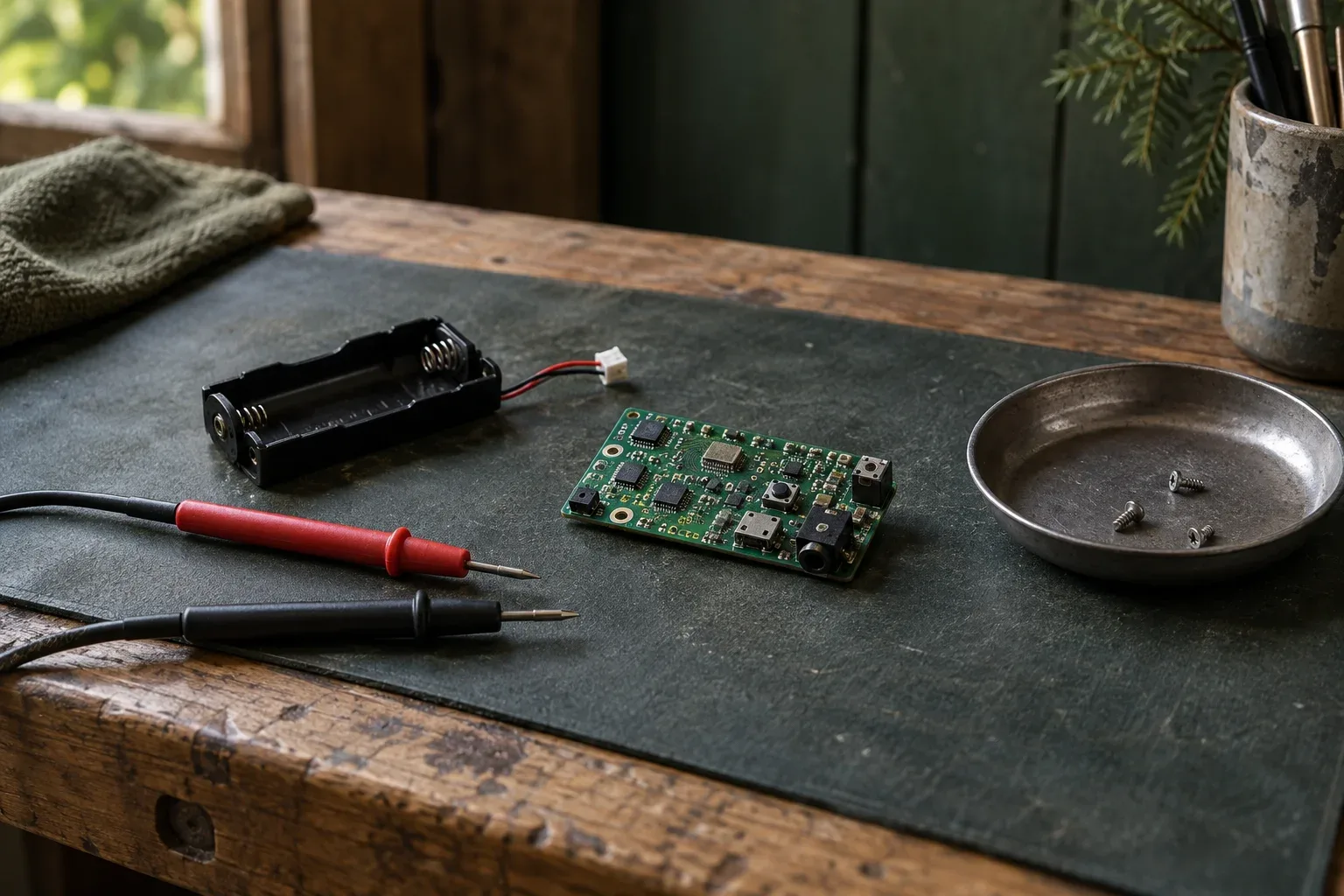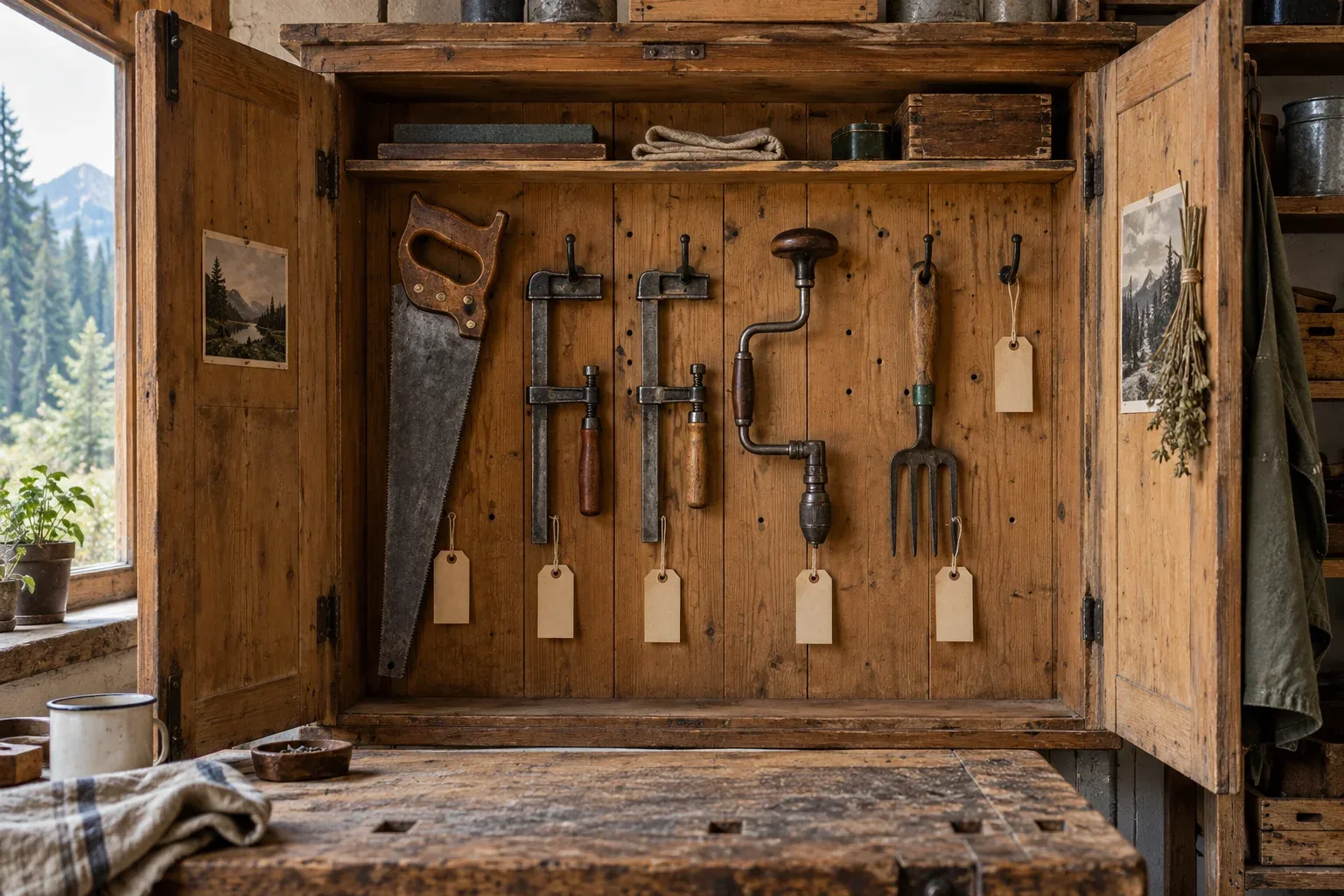
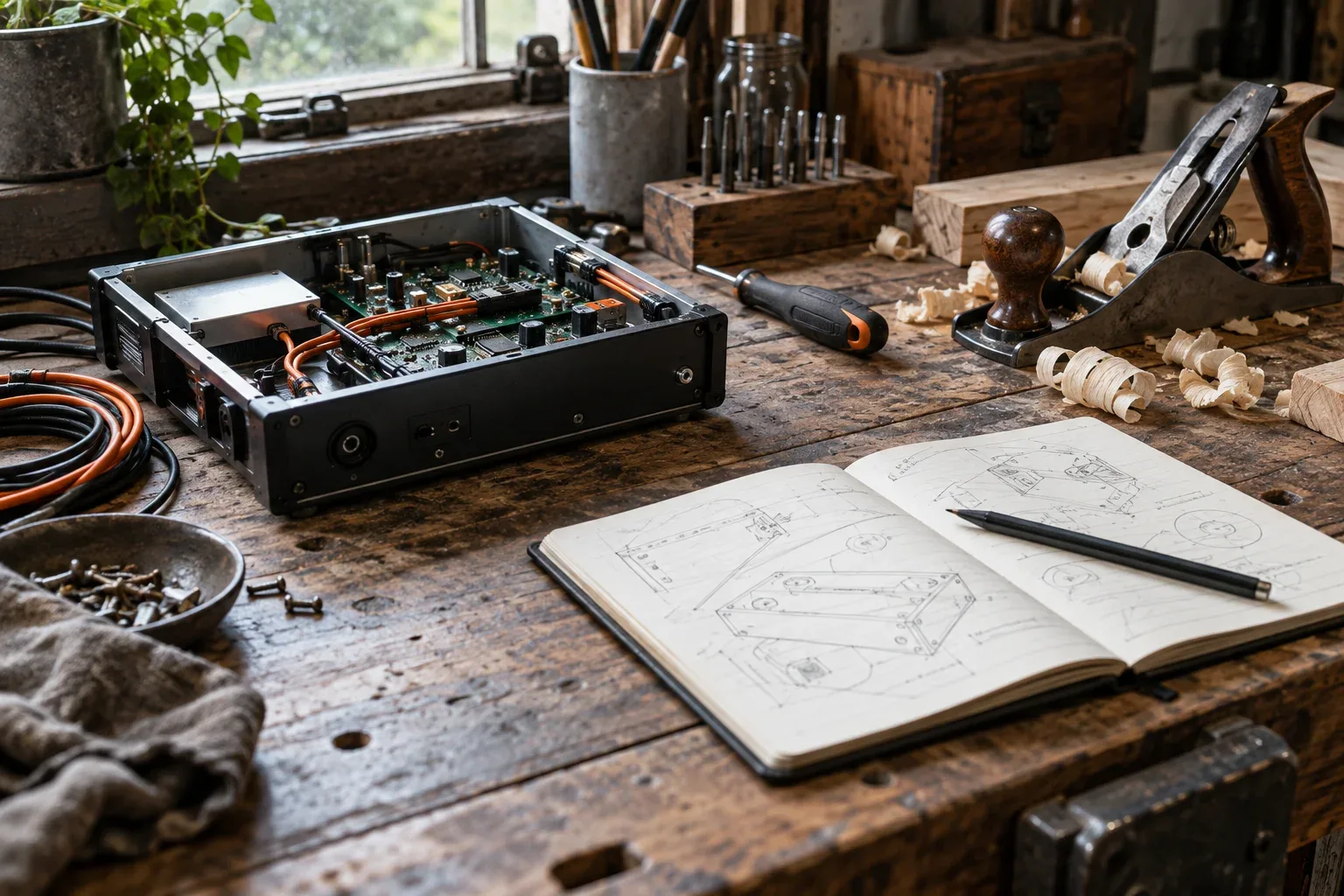
A good workbench is not necessarily beautiful. There may be a scar in the surface, a pencil shortened almost to nothing, and a small collection of fasteners whose purposes are still remembered. Its defining quality is that work can happen there.
Something arrives not quite understood. It leaves repaired, altered, or at least less mysterious. Between those states is a sequence of looking, asking, trying, and recording. That sequence matters far more than the price of the tools.
The sovereign workbench is a useful image for a broader kind of life: one in which we retain a place, literal or otherwise, for understanding the things we depend on.
Permission to look closely
Many modern objects present themselves as finished surfaces. Their internal workings are hidden, their parts are unnamed, and their failures are described as reasons to replace them. Software can create the same impression. A screen presents an outcome while concealing the files, processes, and assumptions behind it.
Looking closely interrupts that relationship. What is this part called? What does the error actually say? What changed before the problem appeared? Where does the information go? Those questions are small acts of practical agency.
They do not imply that everything should be dismantled. Some equipment contains hazards that remain after it is unplugged. Some repairs require trained people, specialist equipment, or permissions. A thoughtful workbench includes the judgement to stop, make the situation safe, and ask for help.
The useful habit is observation before intervention. It turns frustration into a description that you or someone else can work with.
Tools should earn familiarity
It is easy to build a collection around the person we imagine becoming. A more durable workshop grows around work we actually do. A few appropriate tools, used often enough to become familiar, can offer more capability than a wall of unfamiliar equipment.
The same applies to software. Learning the search features of a text editor may save more effort than installing another elaborate knowledge system. Understanding a few diagnostic commands may be more useful than a dashboard full of indicators whose meaning is unclear.
Familiarity reduces the attention consumed by the tool itself. That leaves more attention for the material: the grain of the wood, the shape of the data, the pattern in a recurring fault. Competence often feels like being able to notice more.
Intermediate · A small diagnostic kit that actually gets used
For software, I reach for the same few instruments until they are boring:
journalctl --user -u syncthing -n 80 --no-pager
ss -lptn
dig +short SOA example.org
git -C ~/src/project status --porcelain=v1
For a box on the desk: a continuity tester, a labelled spare fuse of the correct rating, and a notebook. Do not open mains equipment. Do not “just try another PSU” on a live board.
The point is not the brand. The point is that the first observation is a measurement or a log line, not a purchase.
Keep a trace of the work
A repair notebook does not need to be comprehensive. Date, symptoms, observations, changes, and outcome are a useful beginning. A photograph taken before disconnecting a part can be worth more than a page of description. A note explaining why you rejected a possible cause can save the next person an hour.
Here is a deliberately ordinary entry:
Object: desk drawer
Observed: catches in the final few centimetres
Found: loose screw head rubbing the runner
Changed: reseated existing screw; no new parts
Checked: opens and closes freely under normal load
Next: inspect again if the catch returns
Nothing heroic happened. That is the point. The record links a symptom to an observation and a tested change. The same structure works for a software fault or a garden experiment, provided the note preserves the conditions that mattered.
Expert · Bisect the change, not your memory
When a system that used to work now does not, the highest-leverage question is what changed. For git-tracked config:
git -C ~/etc-dotfiles bisect start
git -C ~/etc-dotfiles bisect bad
git -C ~/etc-dotfiles bisect good v1.4.0
For a container host, compare the last known-good compose digest with what is running. For a keyring, gpg --list-packets distinguishes a real secret packet from a stub (gnu-dummy / gnu-divert-to-card). Guessing “it must be DNS” is not a bisect.
Preserve the original state before you change a second variable. A workbench that cannot roll back is a demolition site.
Repair teaches across boundaries
There is a family resemblance between diagnosing a failed script and a sticking drawer. In each case, we form a model of how the thing should work, observe where reality differs, change something, and check the result.
The materials and risks are different. Expertise in one field does not automatically confer competence in another. But the habits transfer: isolate variables, preserve the original state when possible, distinguish observation from assumption, and verify the outcome.
The most useful tool is often a better description of the problem.
This is why practical sovereignty belongs in both computing and physical life. A person can be skilled at running servers and still benefit from learning how their home is heated. A capable craftsperson can gain similar freedom by understanding where their digital records live.
A workshop can be shared
Not everyone has space, time, or money for a private workshop. Capability can live in a shared room, a library, a repair group, or a relationship with a knowledgeable neighbour. Owning a tool is only one way to have access to its usefulness.
Shared work also carries knowledge between people. Explaining a repair forces us to make assumptions visible. Watching someone experienced reveals small movements and decisions that documentation often misses. Being a helpful beginner is a real contribution: you can label parts, record steps, and ask the question everyone else has stopped noticing.
The workbench is ultimately an attitude toward the made world. Things have structures. Failures have causes. Knowledge can be retained and passed on. We will not understand everything, but we can understand more than we did yesterday—and leave a useful trace for the next pair of hands.